
How To Grow Beetroot

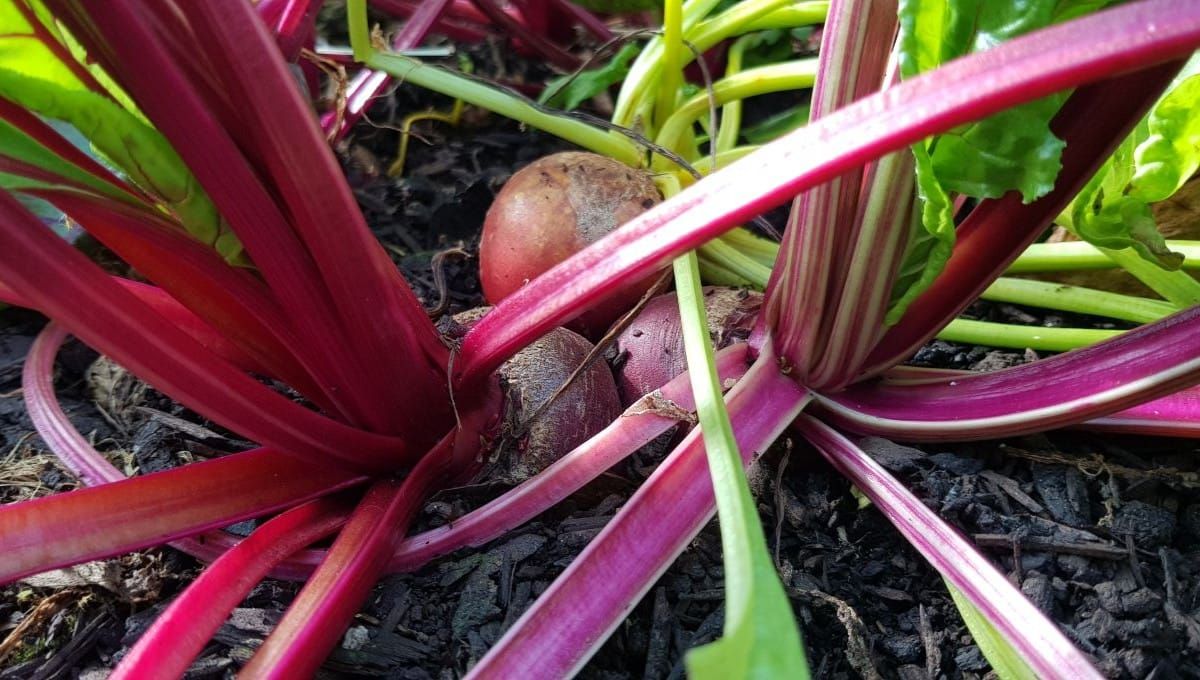
Beetroot is such a sweet crop. Virtues abound for the grower and the cook. They're undemanding on the soil, grow quickly, not bothered by pest or disease, use hardly any space and get on well with everyone - all in all easy peasy ... or is it?
Some of you are having beetroot traumas. All tops and no bottoms, or growing woody, bitter tasting things. A tweak or two in the right direction and hey presto, from fail to success, from sad to happy. Let me take you there.
Timing
Between my greenhouse and garden I can grow beetroot year round if I sow a new row a month. From mid to late autumn until mid spring, I sow them direct in the greenhouse. There after they're out in the garden.
I tray sow initially, and once the soil reaches 15°C, I direct sow. During the hottest months I dot plants between sprawling squashes or flowers to moderate the heat.
Soil Prep
The most important thing for beetroot is free drainage - beach dwellers rejoice! Being a fast turn around crop + a root crop, if soil is in good nick, it generally needs nothing added.
If you are growing all tops and no bottoms chances are you are overdoing the additions - pull back and watch them bulb up! If sandy or clay soil are your lot, spread a layer of compost. Make a mound in the case of poor drainage, or grow your beetroot in pots and keep working on your soil for another season.
The seed
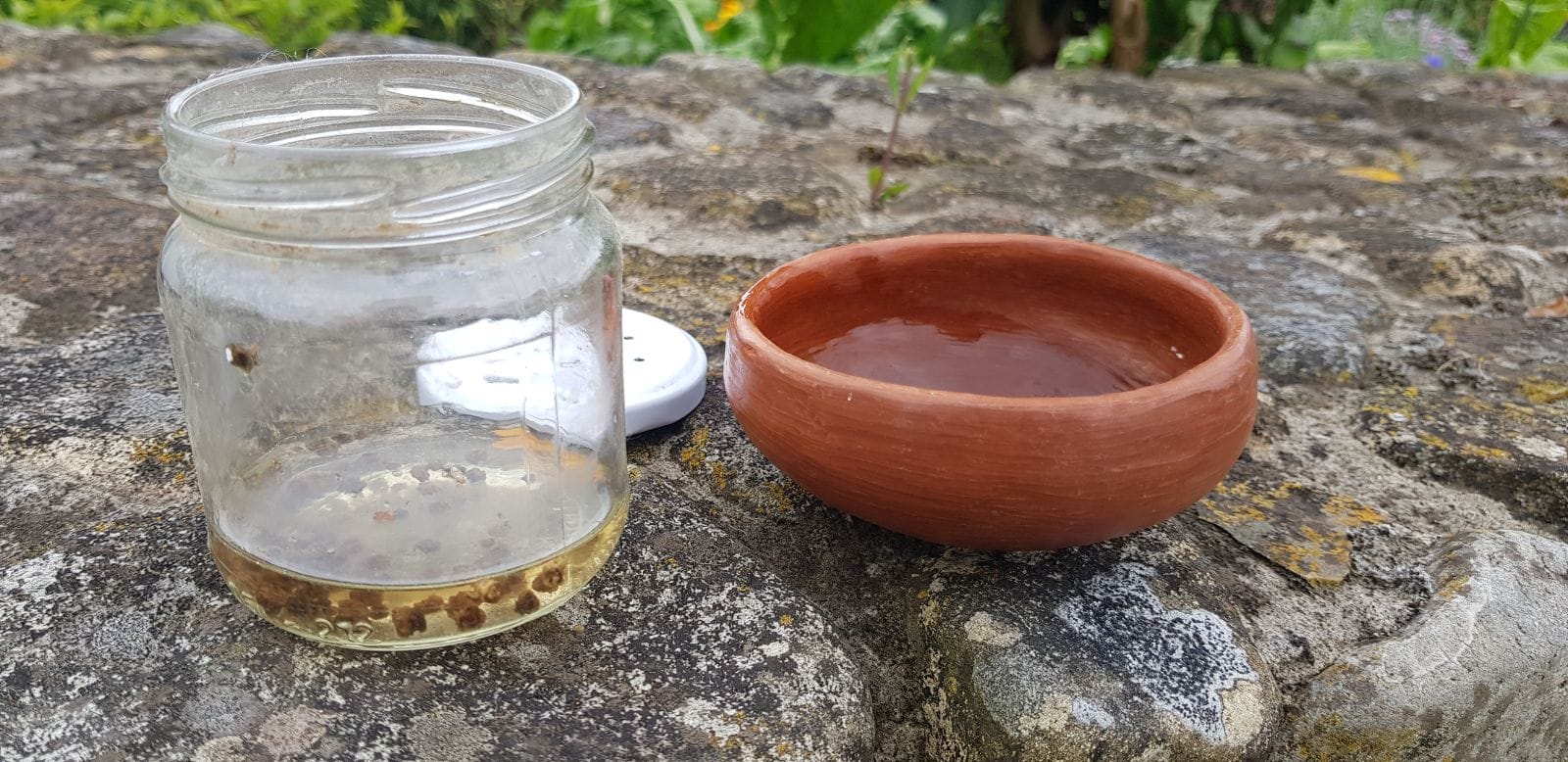
Fresh seed is best. So is soaking those gnarly little nuggets over night. I use a little jar with holes in the lid so its easy to drain off the soaking water.
Cover with warm water.
Leave overnight (or for longer if time gets away on you).
Tip the jar upside down and drain the water off just before sowing.
Each seed is actually a cluster of seeds, so you may get 1 or 3 or 6 seedlings from one. And they won't all germinate at the same time either. New ones will pop up along the way providing a useful staggered harvest.
I sow about 20 seeds a month. From one sowing I'll be harvesting ripe beets over a 3 (or longer) week period.
Sow
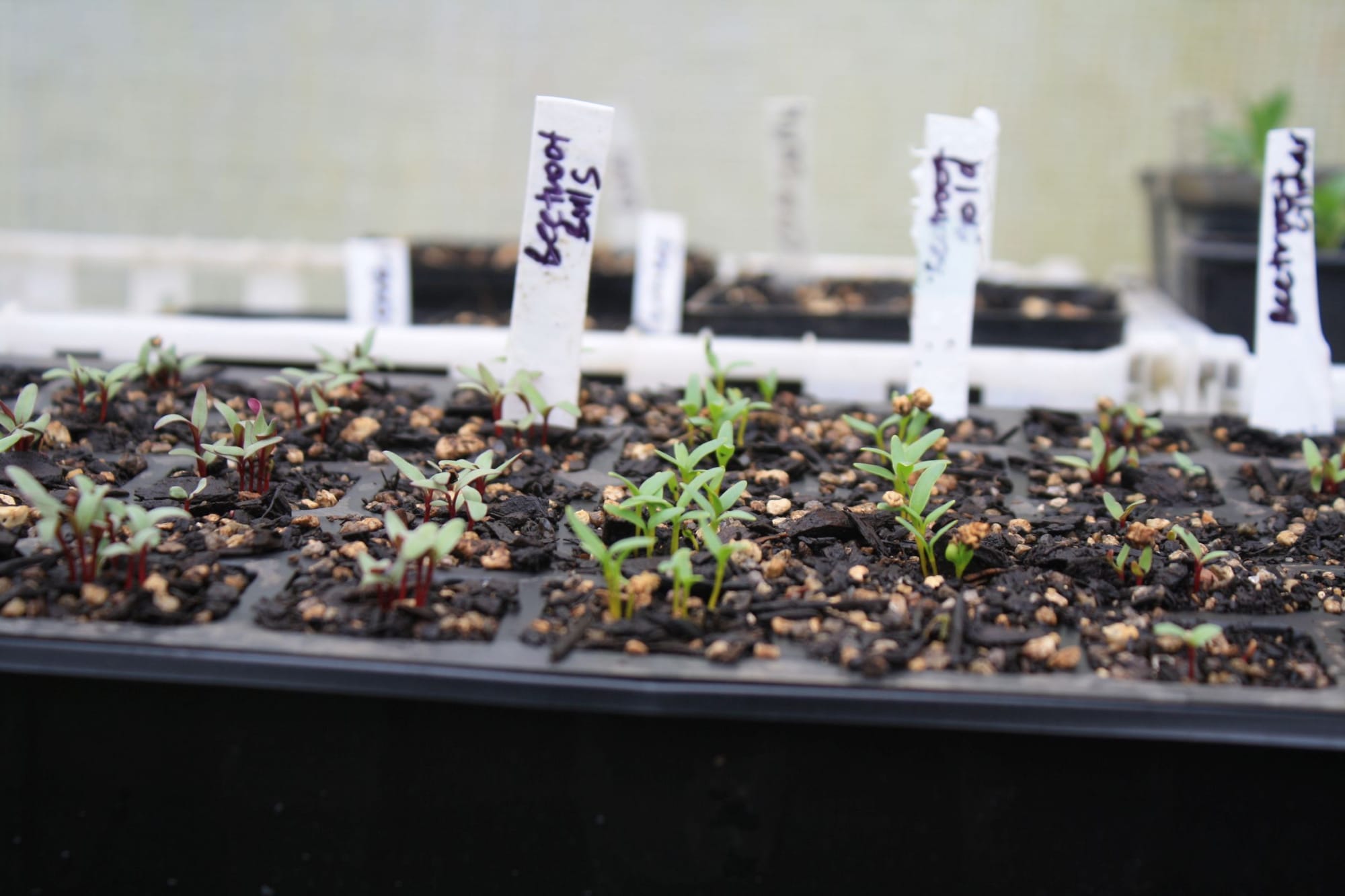
Beetroot is so flexible - you can direct sow, or tray sow. Let soil conditions and temperature be your guide. When soil is warm and light, sow direct. If its cold, wet or heavy - tray sow.
- To tray sow, use small plug trays and pop 3 or 4 seeds in each plug.
- To direct sow, make a small hole, twice as deep as the size of the seed and pop 3 seeds in it. Leave a 10cm space between each group of seeds. Lay a bit of sack over the seed and once the beets have 2 leaves, peel the sack off. Protect these newbies with a bit of birdnet or birdsticks, and if slugs are a risk sprinkle bait, trap, or do slug harvesting at night.
Plant
Plant beetroot in little bunches of 3 with about a 10cm space between each group. Beetroot's such a little guy - little roots, little tops - together they are stronger.
In those little bunches of 3 there will be one that matures fastest - simply peel it off, leaving the others to fill out. Whenever you harvest, scan the row and whip out any seedlings that are crowding. If you are ever so careful, you can transplant the thinnings.
Thin out any seedlings that clutter the space. Its a balancing act - they are bigger in a bigger space, but they grow faster, and therefore sweeter when in community.
Companions
Beetroot grows best as a companion plant because it matures fast (50 - 60 days). Increase the usefulness of your space by planting it with long term crops like tomatoes, beans, broccoli, cucumbers or in between young squash plants or low flowers like chamomile and calendula. Harvest the beetroot as the companion crop is taking over and filling the space.
Choose a companion with a spreading root rather than a bulbing one. Crops stacked like this compliment + support each other, rather than compete.
Watering + feeding
Keep your beetroots barely moist, but don't let them dry out. They don't need extra feeding unless they are growing slowly - in which case I'd want to check out why - too dry, too soggy, too cold? Remedy that first then perhaps boost them with regular liquid feeds.
The useful tops
Yes, beetroot tops are edible, but the roots need those tops, so don't go nicking off with them while the beets are still growing. If you must, just use a leaf from each plant. The leaves of some varieties are better tasting than others. If you are eating them raw, young ones are the go.
Use the older leaves off harvested beetroot as you would chard or silverbeet. If you aren't using them for dinner, snap them off and lay them on the soil to mulch the bit you just made bare.
From top to bottom, beetroot may just be the most useful crop in the garden.
In the kitchen
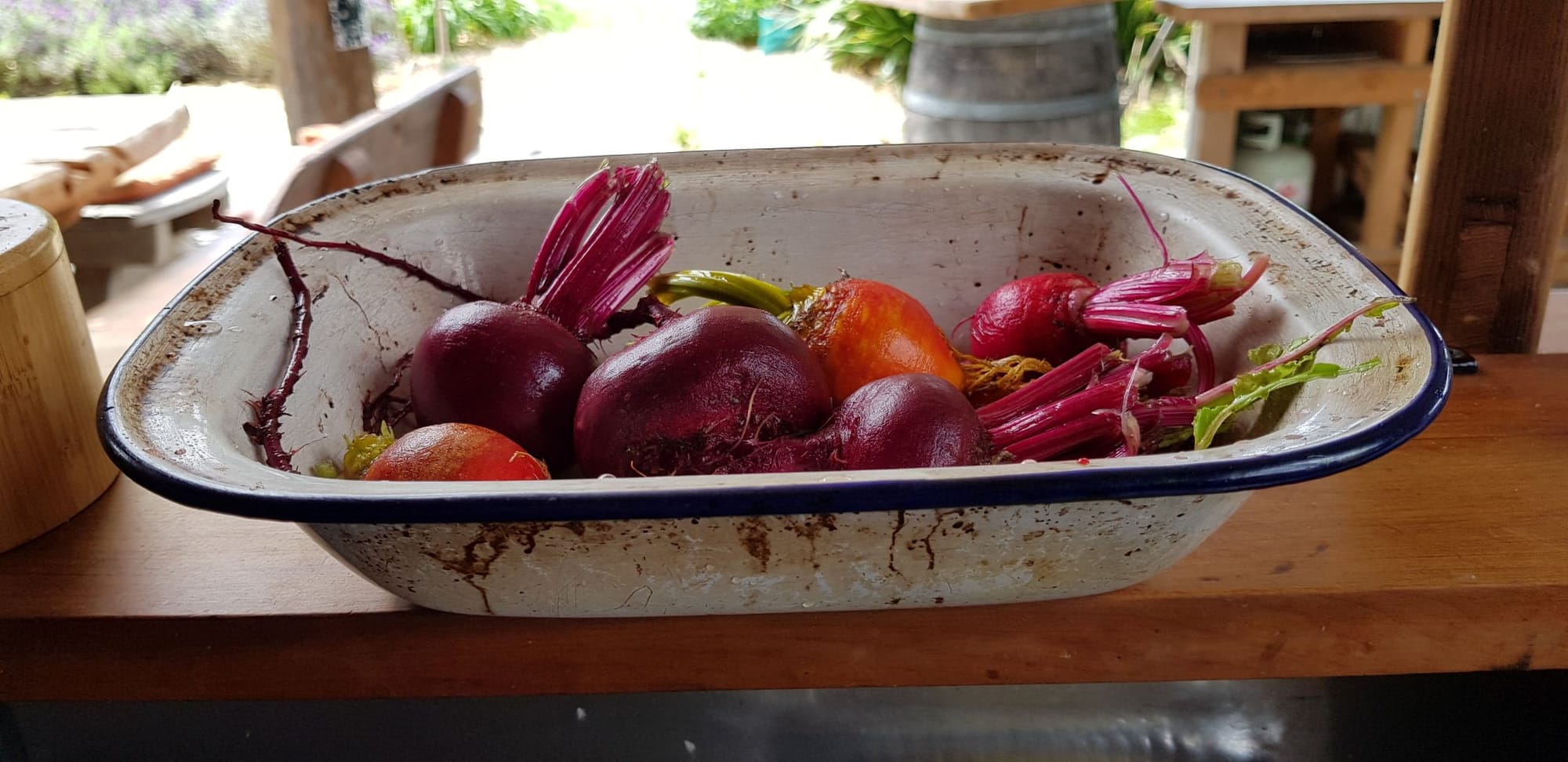
If you love beetroot, you'll want to grow your own because it's best used fresh. It deteriorates quickly, and the flavour changes developing a bitter note that hits the back of your throat.
Fresh beetroot is yum raw or juiced. Most often I grate it into salads. I dream of doing fancier things, but am too busy growing the vegies. Dinners are wholesome, but pretty basic round here.
Roasted beetroot is quick and easy, and usually I do this right after the morning harvest. I roast them whole and peel the skins off once they've cooled down. They last in the fridge for a week this way and are useful in so many ways - in salads, or whizzed up in hummus or a cake. I also love them boiled, in an old fashioned beetroot salad with vinegar kind of way, but then I just love beetroot full stop.