
How To Grow Strawberries, Naturally
There are a gazillion different strawberry fertilisers on the shelves at garden centres - and you don't need a single one of them! The secret to bountiful strawberry crops doesn't come in a bag - it comes from a healthy root system.

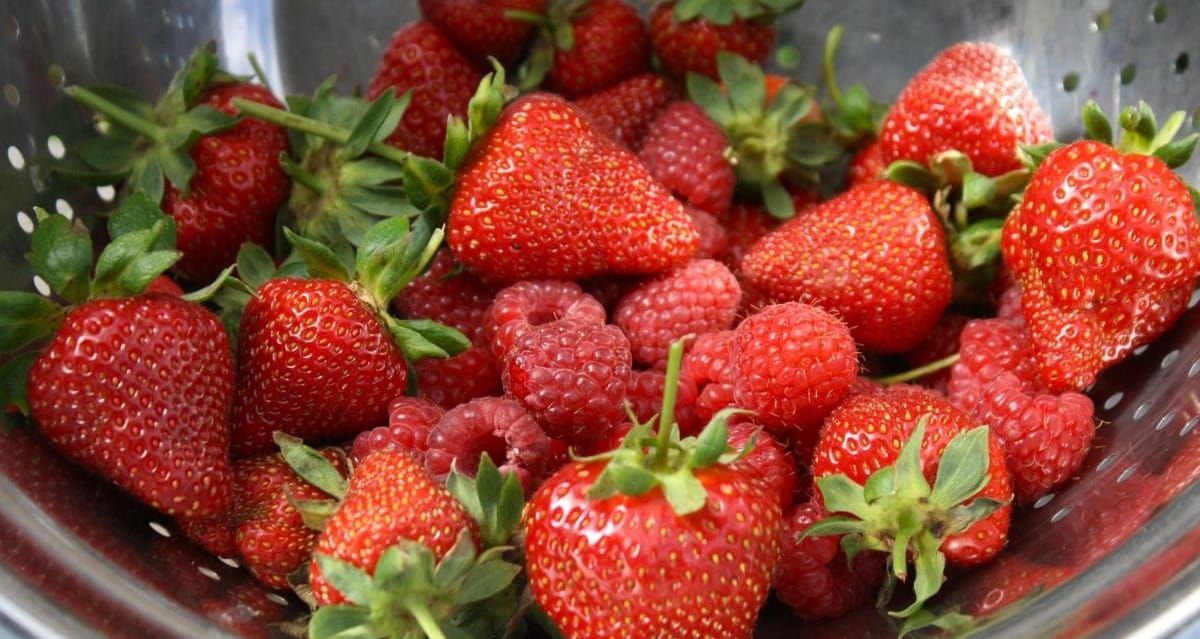
There are a gazillion different strawberry fertilisers on the shelves at garden centres - and you don't need a single one of them!
The secret to bountiful strawberry crops is a good set-up i.e. a free draining, sunny spot, and the very same nuts and bolts that make your veggie garden great - homemade compost + a diverse living mulch + your eyes regularly on the job. Nothing too hard, (or surprising) there - the devil is in the details.
5 strawberry essentials
Lets geek out a little, and dive into the 5 key things that underpin strawberry success.
1.DRAINAGE
Strawberries won’t thrive in poorly drained, or compact soil. If this is your lot elevate plants 100 - 150mm in raised rows of compost, or a raised bed The root hairs that do all the heavy lifting in the nutrient-conversion department are oh so fine, and must be in soil that drains.
2.GOOD MOISTURE
Those same fine root hairs must not dry out either! Retain moisture with compost and mulch, and check soil moisture regularly.
If your soil base is sandy or fast draining - go down, not up. Scoop out the sand in the shape of a gutter about 150mm deep. Lay wet newspaper (optional extra), and fill with homemade compost. Planting at soil level retains more moisture.
3.AIRFLOW
Airflow is important for every crop for all-round best health, but there's an added extra as far as strawberries go - wind is an important part of pollination, i.e. the transfer of pollen that turns flowers to fruit. Something to look out for because strawberries - being low-growing, are vulnerable to missing out on the breeze.
4.FULL SUN
Plant your strawbs where they will bathe in full sun from late winter to stimulate bud burst, and because photosynthesis is the best fert, and sun-kissed berries are the sweetest.
But there's sun and there's sun right. Over 25°C and life gets a bit stressy - fruits are smaller and there are less of them. Mitigate this, in hot places, by choosing short-day varieties that are finished fruiting by mid-summer, and/ or plant them where they will have relief from direct afternoon sun.
5.SOIL FUNGI
The nutrients that strawberries need to grow fat and sassy come via soil fungi that grow into the roots and, like hair extensions, reach out and join the vast below ground fungal network.
Belonging to this network extends their nutrient hunting ground a thousand fold, and provides many more advantages besides - immunity, pest and disease resistance et all.
- Soil fungi flourish within naturally healthy soil - homemade compost, vermicastings, spray-free mulch, diverse living mulches and most of all a diversity of support plants + trees throughout and around your food gardens.
- Soil fungi wont flourish alongside: non-organic pea straw, artificial fertilisers, fungicide/ herbicide/ pesticide, excessive nitrogen, too much fertiliser of any kind, low plant diversity, or poor soil e.g. compact, poorly drained, or dry.
Planting how-to's
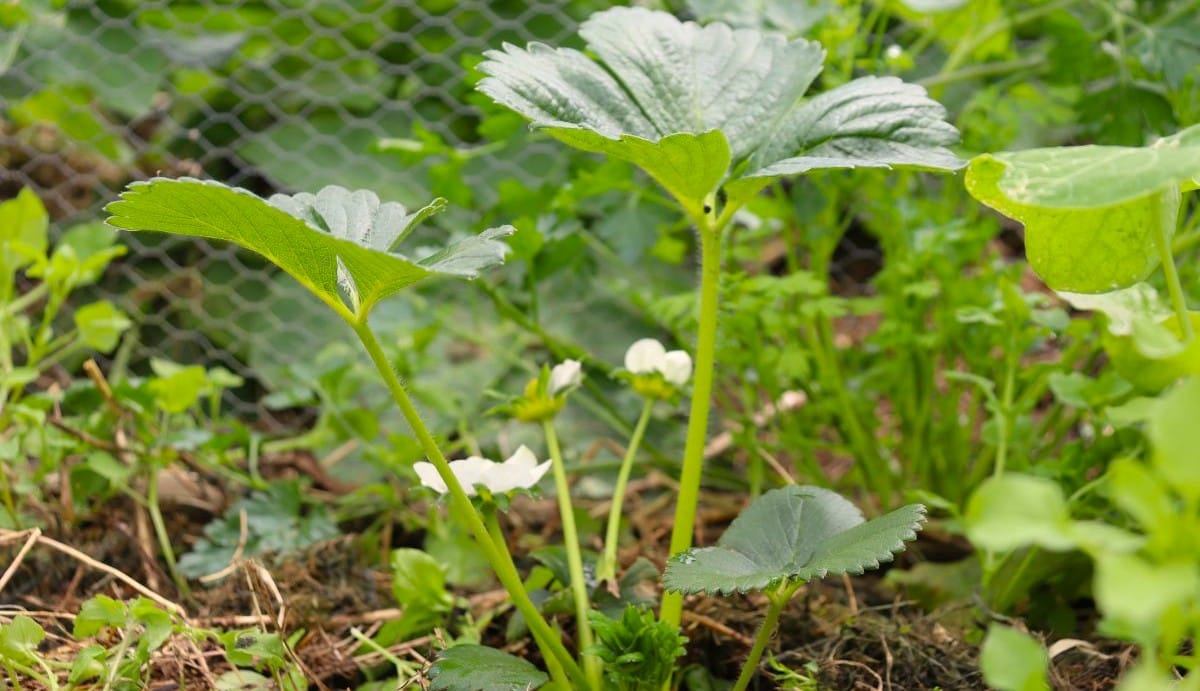
A good crop of healthy strawberries begins with a sturdy plant that has lots of healthy leaves. Healthy leaves make for excellent photosynthesis, which in turn means strong roots.
To this end, plant anytime from Autumn through Winter to allow roots to establish. Pluck flowers off until there are at least 10 good leaves.
COMPOST + VERMICASTINGS
Plant strawberries into homemade compost mixed with vermicastings, or a small amount of well-rotten manure. If you don't have enough homemade, find good organic compost and mix some in. Homemade compost is alive (unlike its bought counterpart), and retains moisture beautifully.
PROTECT THE ROOT CROWN
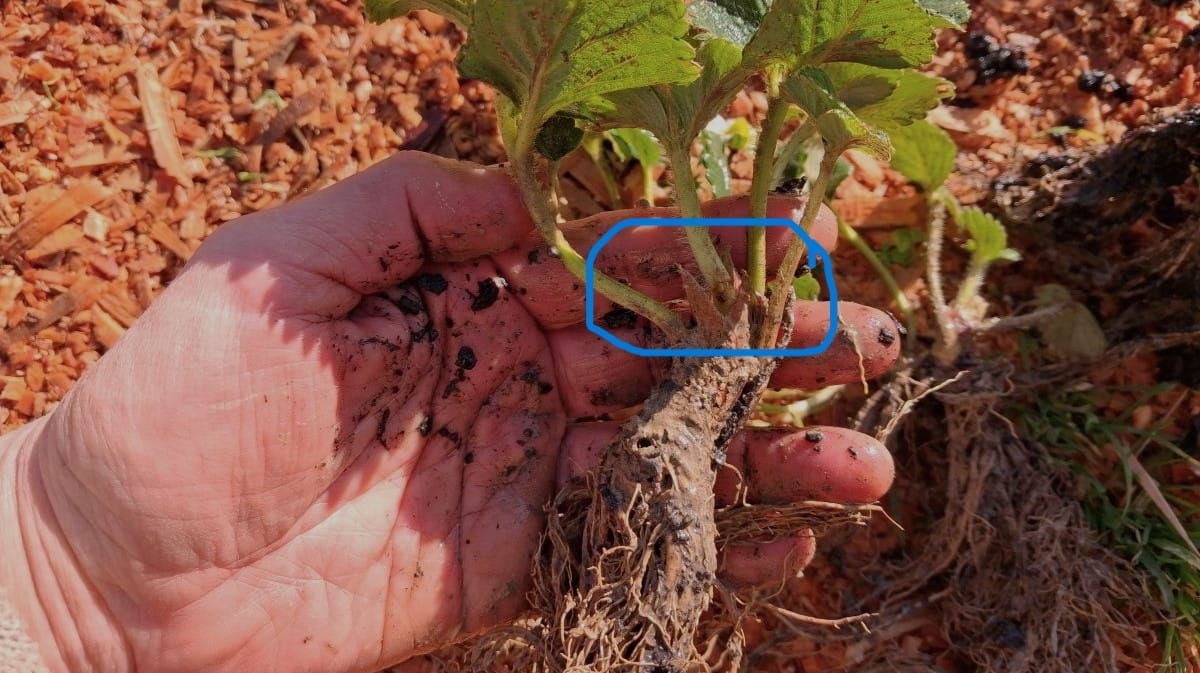
Here's a game changing bit of info - plant your strawbs so that the root-crown (the bit just above the roots), is level with or just proud of the soil. The root crown is where new growth springs from, and its important - don't bury it!
SPACINGS
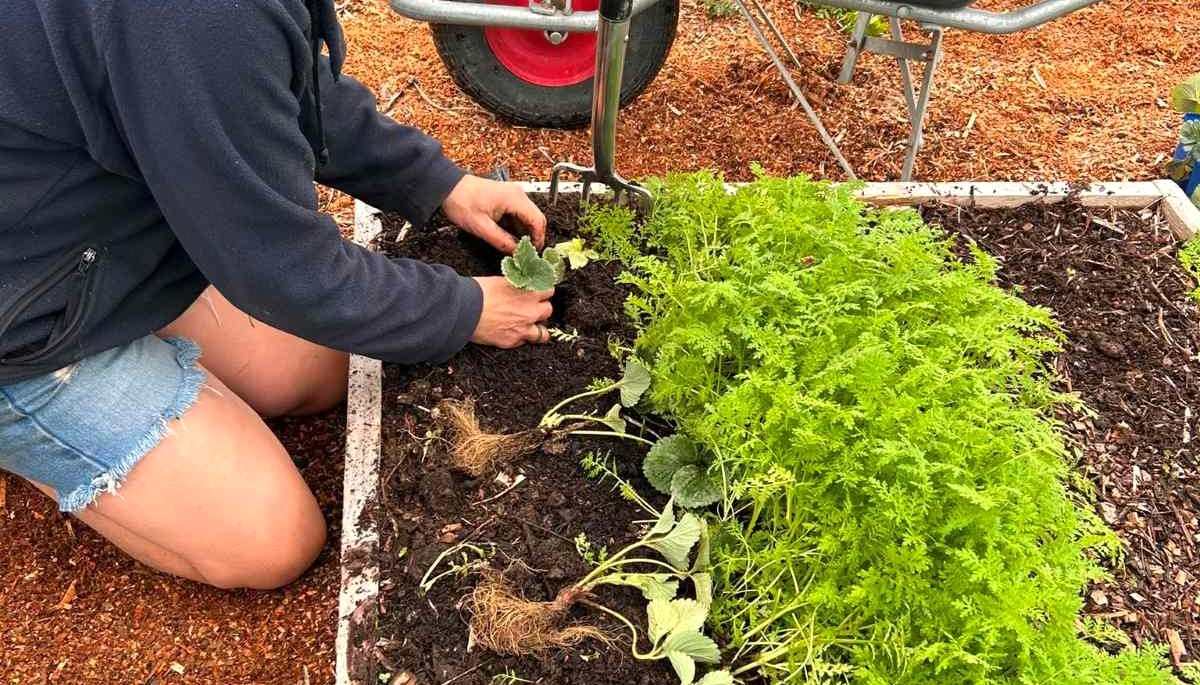
The better the soil, the closer you can plant. The strawberry plants in the pic below are planted into 100% homemade compost and so I have spaced them 150mm apart. Space them wider where the set-up isn't as glamourous.
MULCH + LIVING MULCH
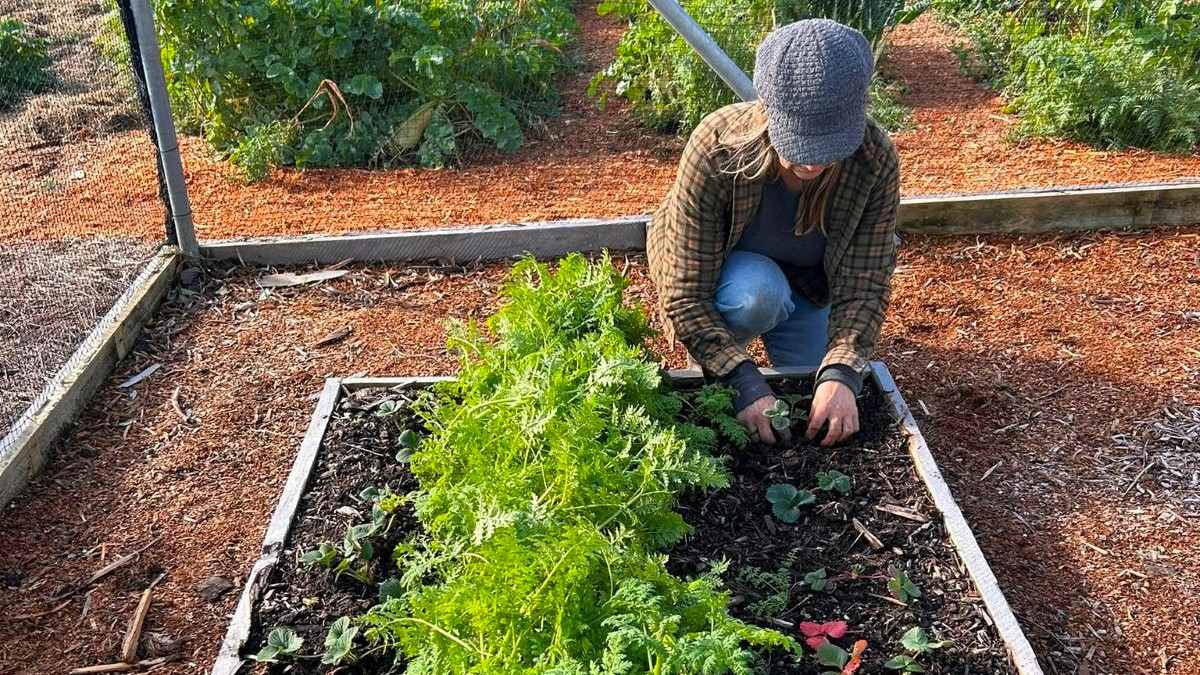
Strawbs benefit from both mulch and living mulch. Mulch immediately around the plants for best light and airflow, near to a living mulch for all those roots and more importantly the microbes on them.
- Mulch - use ramial chip, well rotten woodchip or a homegrown mix of whatever dry browns you got at hand.
- Living mulch. Sow or plant a diverse mix of low growing scramblers like crimson clover, phacelia, vetch, leafy greens, saladings, spring onions, calendula, between rows. Or, plant strawberries on the sunny side of flower gardens, veggie beds - anywhere plant diversity reigns.
BIRDS
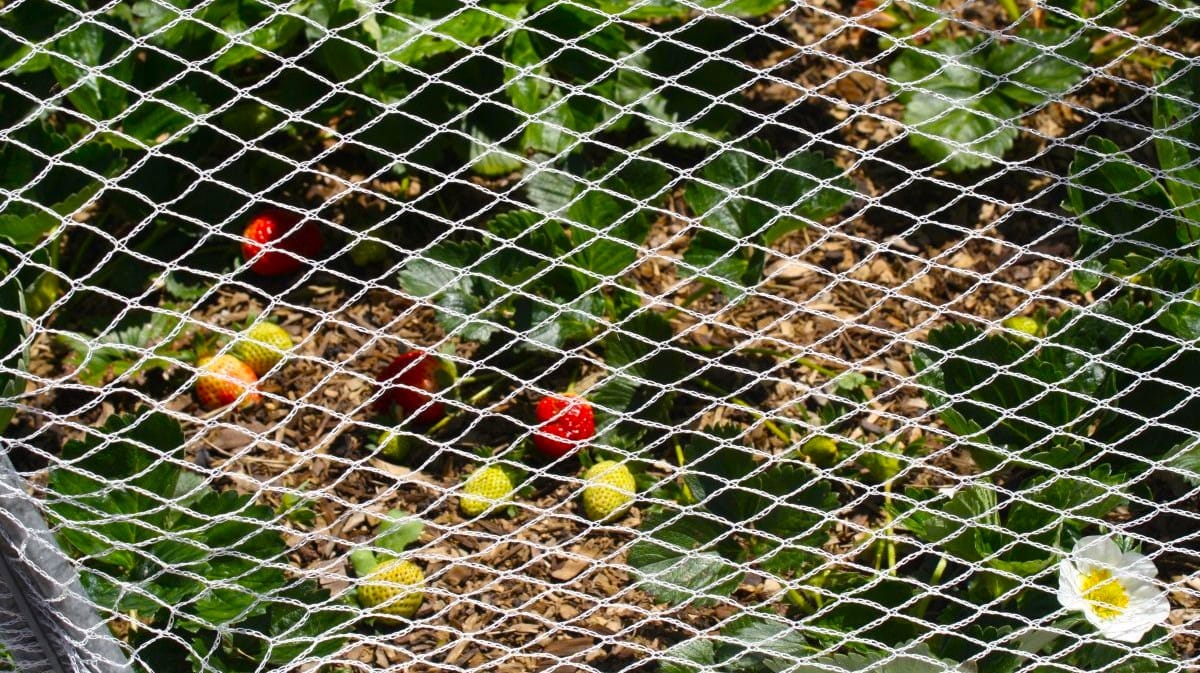
Wherever you plant your strawberries, be sure you can set up bird net easily. Net needs to be off the plants over hoops or on stakes otherwise birds will sit on the net and peck fruits through it.
Buying plants
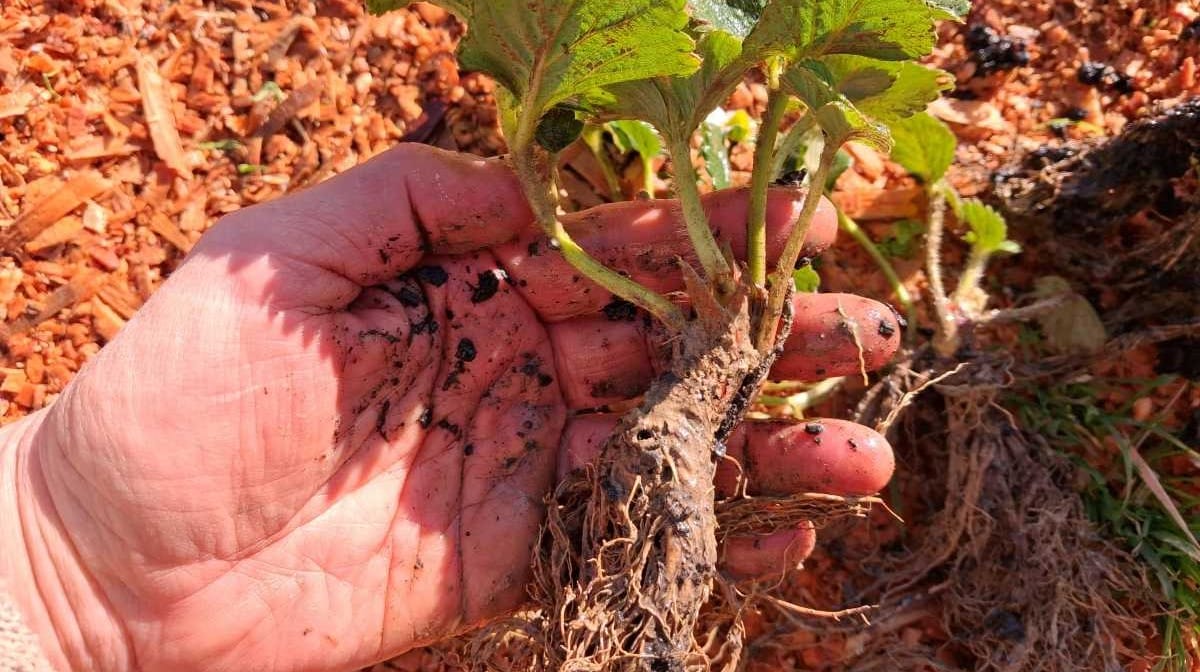
Choose bare rooted plants for best value. If you cannot find bare rooted, potted is AOK, but no need for big pots. There's no advantage, and you end up paying a whole lot more for extra soil.
Strawbs are divided into two camps: short-day and day-neutral.
- Short-day varieties provides a concentrated harvest mid spring to mid-summer. My favs are Camarosa, Ventana or Pajaro.
- Day-neutral varieties spread the harvest in a little and often fashion summer through autumn. My favs are Monterey and Moxie.
x1 happy strawberry plant can provide about 1kg of berries... ish. As always, much depends. Each variety differs, the age of the plants impacts - after 3 years plants start to decline, and lets re-emphasis the word happy. Because plant happiness is central to productivity.
Strawberry lifeline
Strawbs are short lived plants, after about 3 years old,productivity starts to wane.
Magic potions for strawberry plants
Ha! got you there. You don't need any. With all the above ticked off , your strawberry plants will thrive. If they do not - one of the above is absent.
Support poorly plants with vermicasts, and a seaweed or herbal liquid feed to tide them over while you ponder why your strawberries are unhappy (too wet, too dry, too old...), and what you will do to rectify it.