
Weed Smarter Not Harder #2
Here are my 6 baseline strategies for working with your weeds. These strategies suit all the cruisy weeds, and many of the tricky weeds as well - though not all of them. We'll dive deeper into the tricky guys next month.

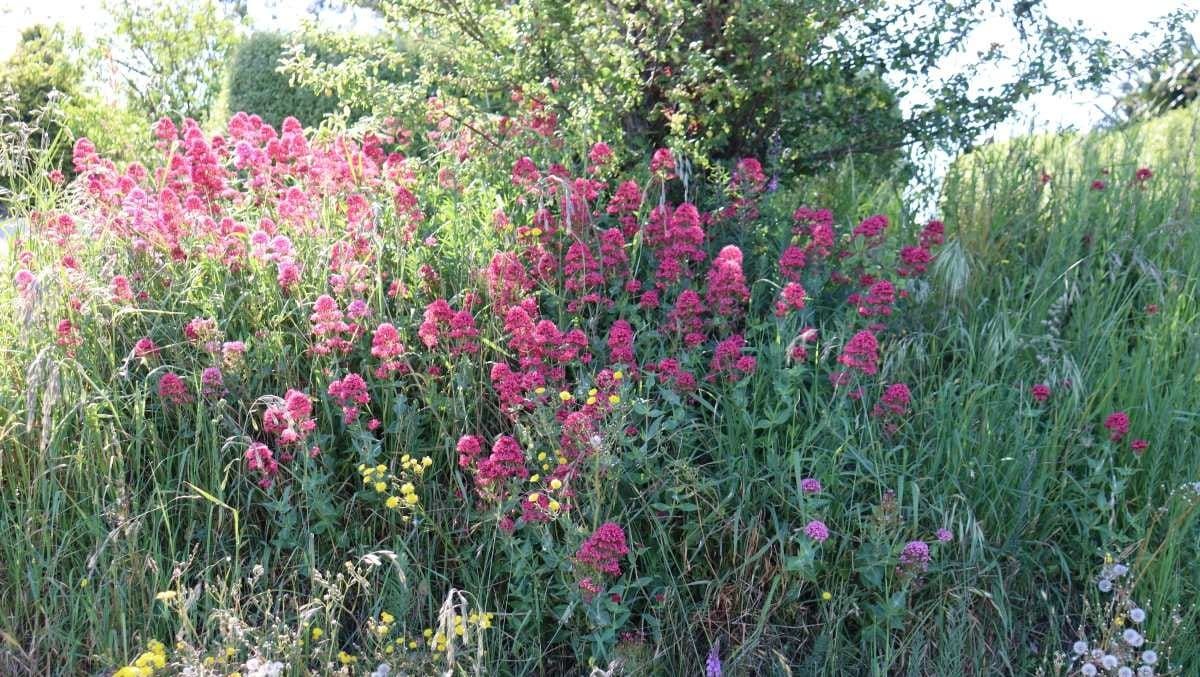
Last month in Weeds #1, we were philosophising on the big picture - the weedy why + the human how, and decided that for an easy life, we need to stop working against the weeds and start working with them.
So lets! This month I show you how with my 6 weedy strategies. These work for nearly every weed. There are, of course, a few truly tricky outliers - we'll get to those next month.
My 6 weedy strategies
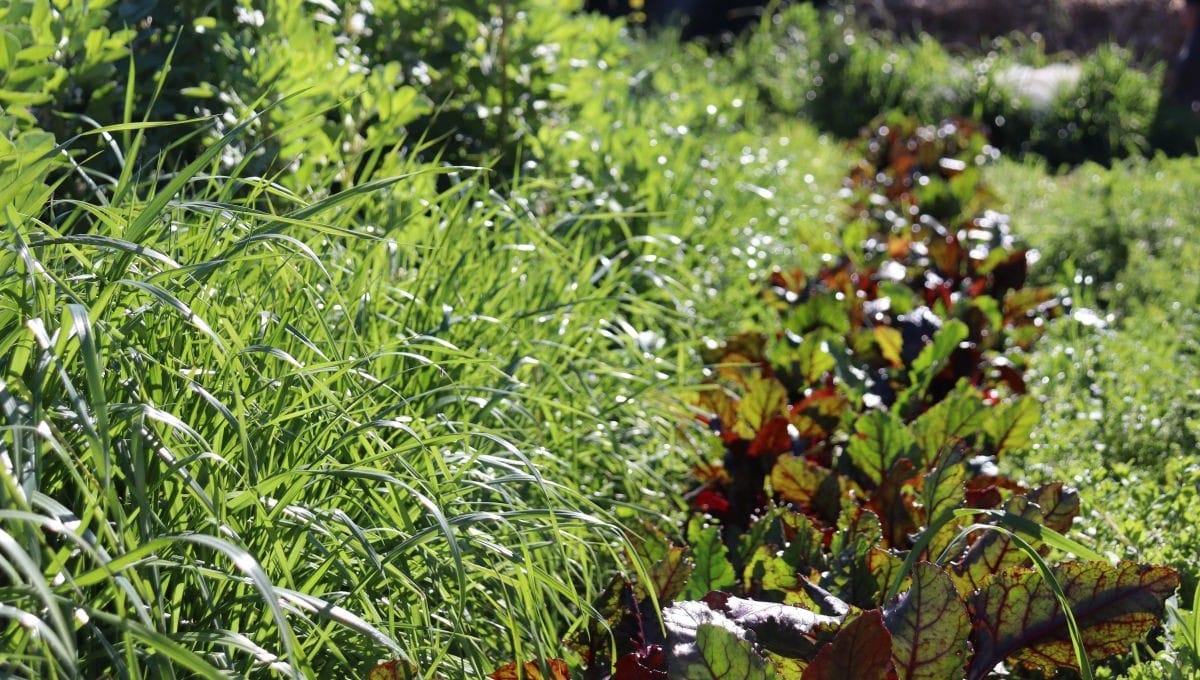
This first strategy is in some ways the easiest - there is nothing physical to do, but mentally it will be the toughest for many of you. It may even terrify you!, but please don't skip it. Stick with me here - its the very heart of weeding smarter not harder. Be brave - read on...
1.Leave the weeds
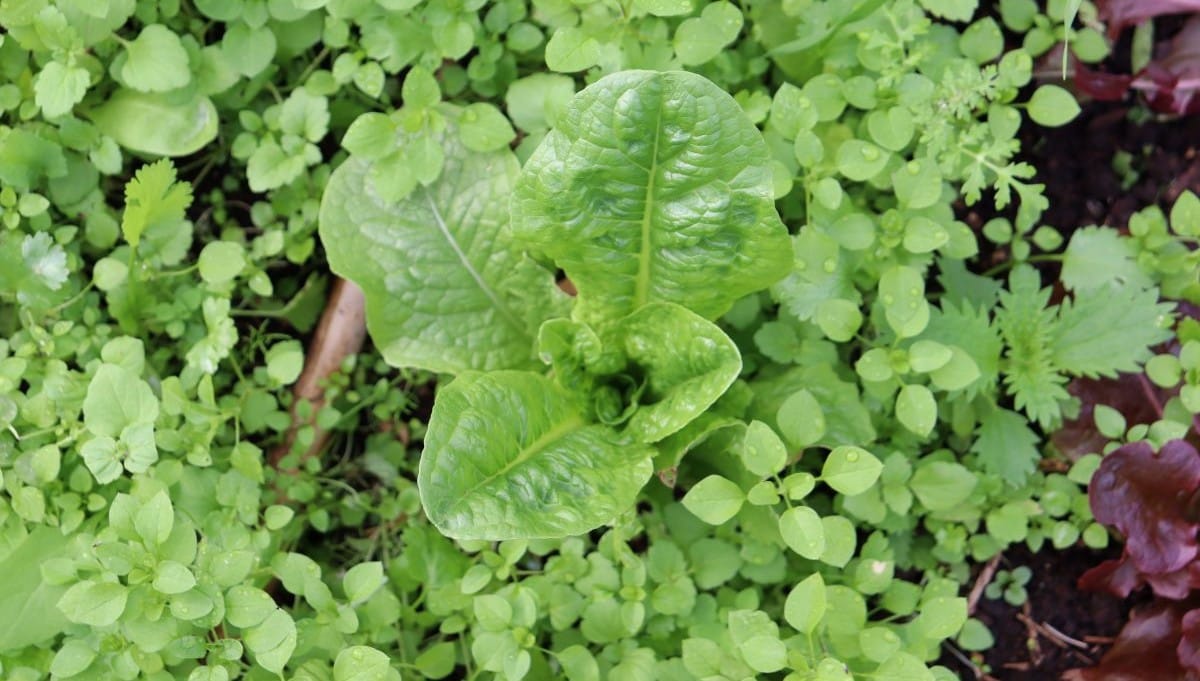
By "leave the weeds" I'm not talking about leaving every weed, certainly not the tricky dominatrices - ivy, convolvulus be gone, now! today! We're being discerning and choosing the gentle ones, the edible, the medicinal, and the beautiful, because yes, I find yarrow, dandelion and chicory beautiful. I adore hawkbit, flowering grasses and lawn daisies too.
Leaving the weeds isn't forever. Chop-and-drop (strategy #2) stops them self seeding, and eventually many of them disappear as the soil improves and living mulch establishes.
In the veggie patch:
Weeds are super nutritious, and can work really well as part of a living mulch. These are the weeds I'm happy as to leave, and work with in my veggie garden: amaranth, chickweed, cleavers, dandelion, fathen, fumitory, hawkbit, puha, purslane, red dead-nettle, speedwell.
I'm not keen on veggie gardening around weeds that take up lots of growing space like buttercup, or vines like convolvulus. Those weeds I hand weed out, or smother before creating the garden. You choose the weeds that work for you.
With fruit trees:
Fruit trees can handle the more rambunctious weeds. As well as the weeds above I'm happy to work with acanthus, buddleia, buttercup, couch, dandelion, deadly nightshade, dock, inkweed, kikuyu, nettle, onion weed, plantain, scotch thistle, stinging nettle, woolly nightshade, yarrow, wild carrot.
Which weeds can you relax about it, and make use of?
2.Chop-and-drop
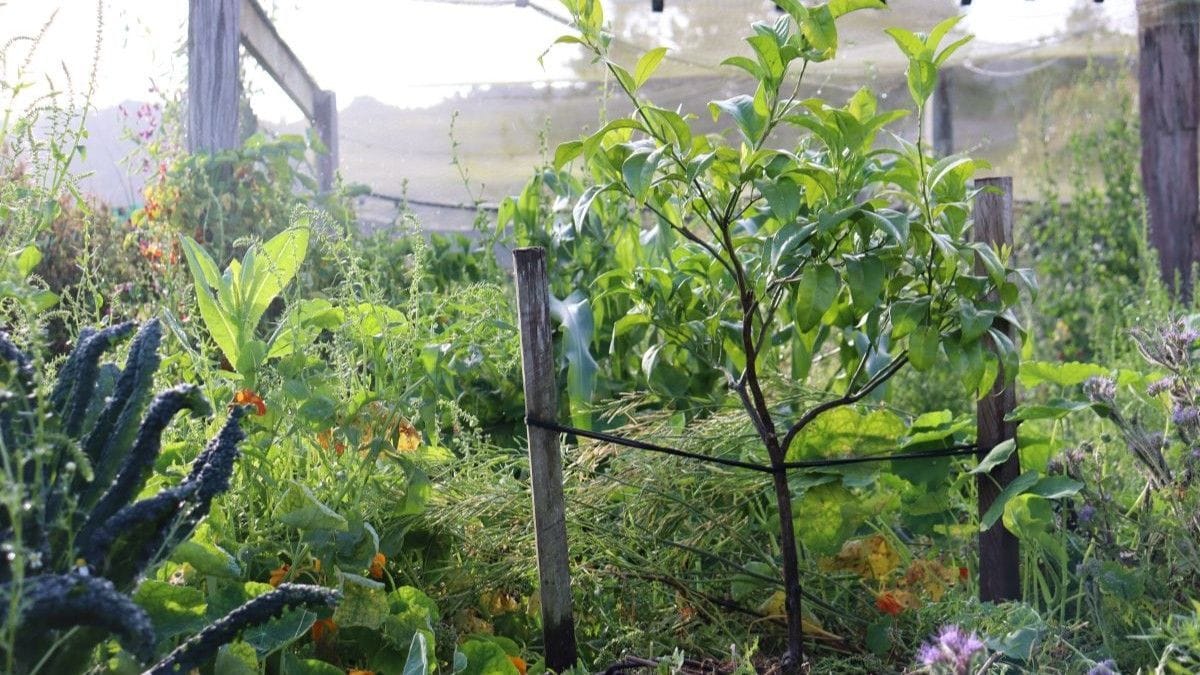
Chop-and-drop is the answer to so many of your weedy problems! Timing is the thing, alongside outcompeting (strategy #4).
Chop weeds pre-flowering to prevent them seeding. This same timing also builds soil health. When plants flower, all the sugary exudates that were pulsing out the roots feeding soil biology, segue into the flower/ fruit/ seed development. Well timed chop-and-drop keeps the sugars flowing out the roots, which keeps soil life buzzing, and your garden humming along.
- Use a scythe, weed eater, mower or flax knife and either drop the chopped tops on the ground as mulch, or add to compost piles, or make herbal liquid feed - either way, so nutritious!
How simple can your garden life be?
3.Hand weeding
Is totally doable! Much depends on scale, and of course on your energy and enthusiasm. Hand weeding should be a larger job at the start eventually fading away to little bits.
Best done when soil is nicely moist - neither soggy nor dry. Use a standing fork to loosen the soil first - this makes it easy to pull the weed up, and saves your back.
It's well suited to tenacious weeds like buttercup that hang onto the soil like limpets, and to small infestations of whatever weed you want to clear out pronto because it spreads fast, or you plain don't love it.
I know organic farmers who, as part of their strategy to move California thistle from their land, went out after tea a few times a week from spring through summer, grubbing them up. If they can do a farms worth...
4.Outcompeting
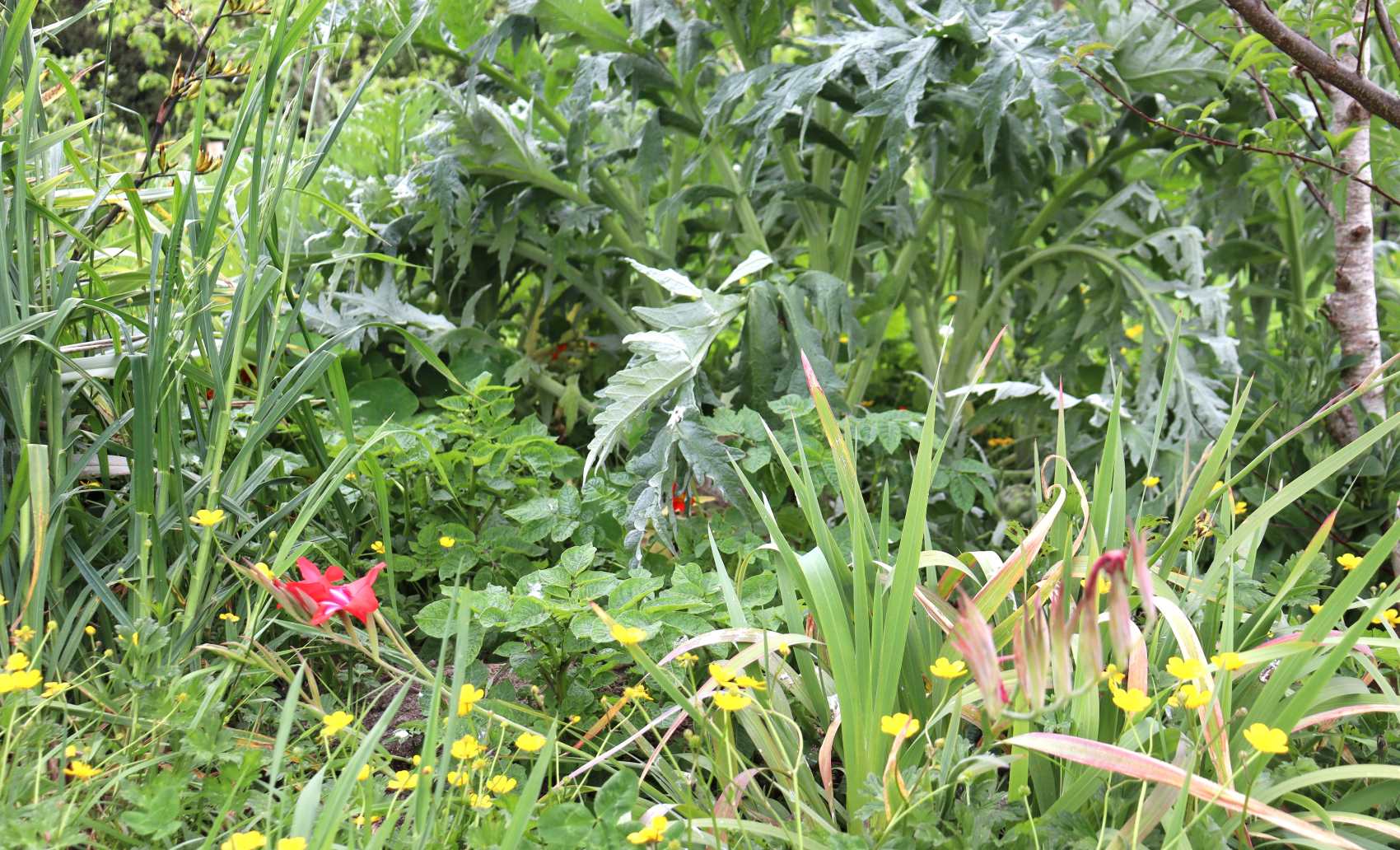
Outcompete weeds by planting bolshy perennials amongst them. Many weeds can be outcompeted, but not all. Vines and bamboo wont be subdued so easily (we'll deal with those next month), but barberry, blackberry, buttercup, California thistle, gorse, inkweed, nightshade, onion weed, oxalis - all manner of weeds that you think are impossible - can, and will be outcompeted.... if you are cunning enough!
Choose the competitors
Choose a diverse range of 6 or so (diversity is key!), perennials to be the competitors. Their job is to dominate the weed so they must be bigger + bossier in size and habit than the weed. For example little old onion weed is easily outcompeted with borage, dahlias and globe artichokes, whereas blackberry needs fast growing trees and shrubs like tagasaste, mahoe, or karamu to shade it out. Use evergreens if the weed is evergreen.
Notice any plants thriving amongst the weeds - use those! At my place miners lettuce, salad burnet, comfrey, borage, silverbeet all self seed happily amongst grass and weeds.
Prep the space
Cut/ mow the weed back, or grub/handweed it out. If the weed covers a large area and is rambunctious you may want to smother it first (see strategy #5).
Plant + sow
- amongst the weed
- or, if its a weed like oxalis or onion weed that thrives on disturbance, plant on top of it into mounds of mulch or compost.
- or, in large areas, on steep slopes, or where access is tricky toss seedballs (seed mixed with clay and rolled into balls). This is great around unfriendly shrubs like gorse, boxthorn and barberry.
Plant closely - as in super close! The more plants you have to fill the space the less room you leave for the weeds, and the less aftercare you need do.
If you've hand weeded or smothered the area first, sow a mixed, fast growing green-crop around your perennials to cover the ground quickly while the perennials get going. This is how mother nature does it! Otherwise, mulch thickly, perhaps using cardboard beneath the mulch for further oomph.
Aftercare
The weed will poke its head through - of course it will! Pay attention during the first 12 months while the new perennials establish - otherwise all your hard work will be undone.
Chop-and-drop it, or hand-weed the little bits. Eventually you may decide that little bits of the weed popping up here and there through your new perennials is totally fine ... enjoyable even.
I once helped a young couple transform a bank of onion weed in this way. A year later, they were delighted with their bank - fruit trees thriving and beneath them a meadow with seasonal pops of colour. Amongst the plants, sweet little white flowers popped up here and there. "What are they?" they wanted to know... onion weed! ha!
In the veggie patch
Outcompeting with annuals works a little differently. For starters you want to clear tricky pernicious weeds with hand weeding or smothering before you create your veggie patch. Ever after, never leave the soil bare, so as to never invite weeds in. Keep it covered in living mulch, or mulch at all times.
5.Smothering
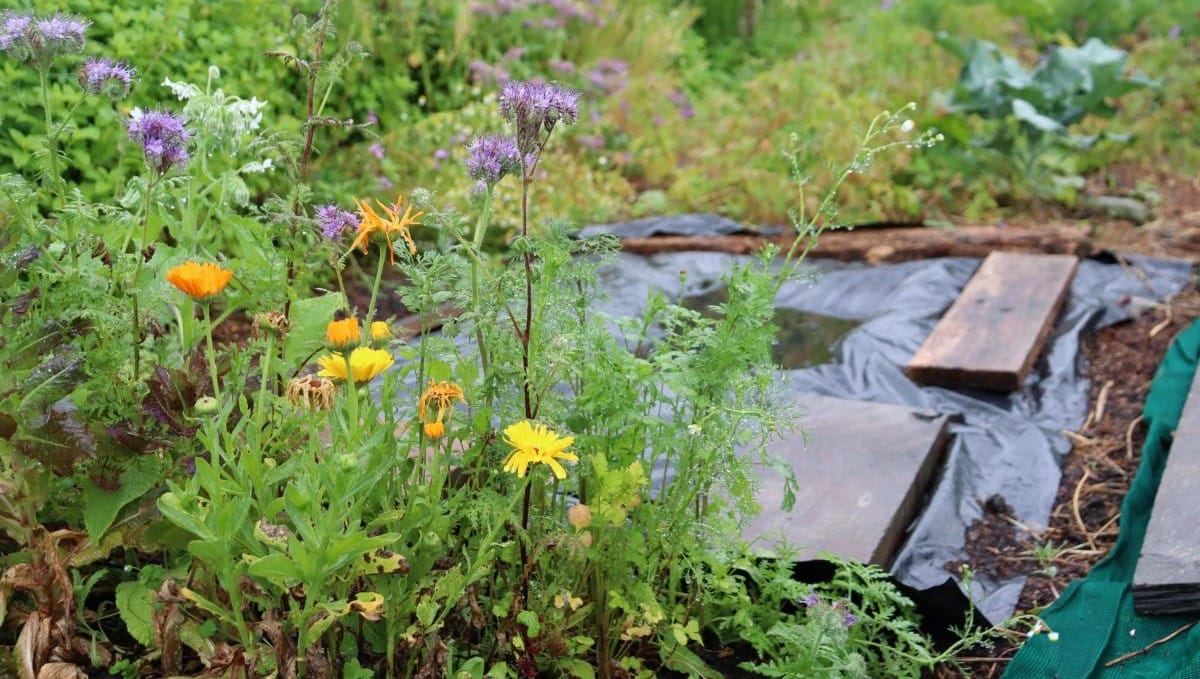
Smothering is excellent for dealing to tricky weeds before gardens go in, but equally useful at any stage weeds take over and become too much to hand-weed.
Annual/ softer weeds are easily smothered - simply pile mulch on top. More determined perennial weeds e.g. buttercup, convolvulus, couch, kikuyu, thistle or trandescantia, need a more intense cover like old carpet or black plastic, and more time to subdue.
- Lay plastic over the top of the area - without light the weeds cannot photosynthesis and will eventually stop growing. Depending on how determined the habit of the weeds, and the season (its faster when its hot) as to how long this takes. Lift the plastic and keep checking. Wait until all the tops are dead.
- Mow or chop around the edges to catch any weedy shoots that spring forth.
- Remove the cover once the tops have died off, aerate the soil, spread compost and sow or plant a mixed living mulch right away.
See pgs 124-125 Homegrown Fruit: A Practical Guide, for a detailed description of doing this over a large weedy area.
6.Use animals
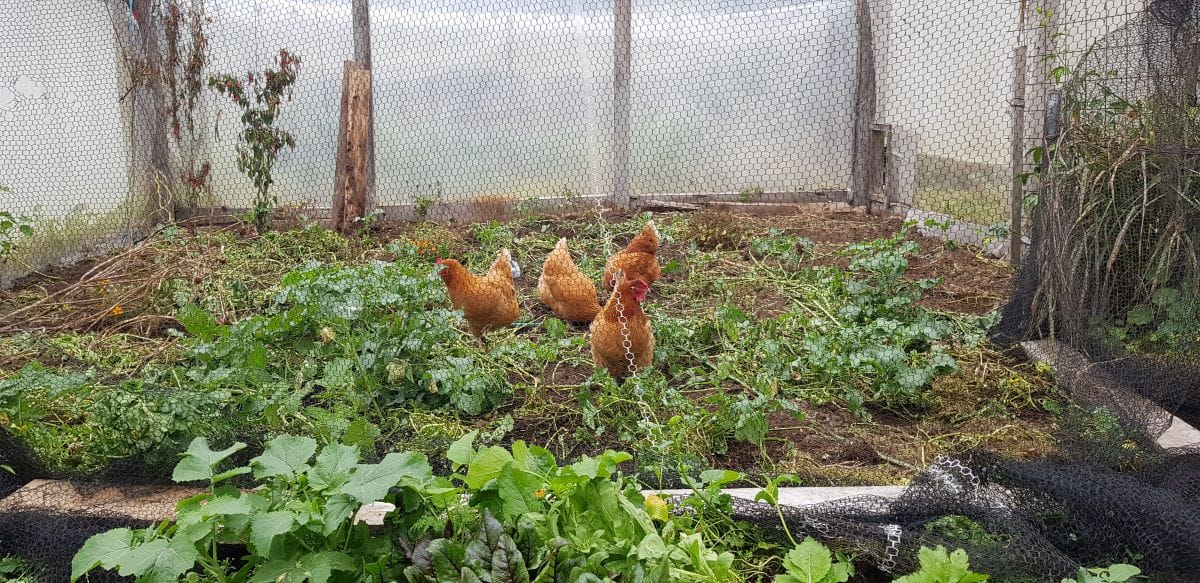
Animals are awesome for holding incoming weeds back - situate pasture/ runs between your food gardens and the weed.
Or use them to clear big weedy areas, before putting gardens in. They wont clear everything up, so you will need to go in after them to finish off properly. Then, as always, plant the area right away to get a head start on the weeds return.
Chooks scratch up the bulk of convolvulus, couch, kikuyu, tradescantia.
Geese, turkeys, and Muscovy ducks graze couch and kikuyu.
Goats nibble blackberry, but because they prefer a variety it takes time for them to wipe it out.
Pigs roots up grasses and vines. Fence them into small spaces, and move them on frequently. Rake the area they've rooted up as soon as they are off it and plant it up right away.